
Root Canal Treatment
Considering Root Canal Treatment in Croydon?
Root canal treatment is often feared by many individuals who envision lengthy procedures and a painful experience. However, that couldn’t be further from the truth. Modern-day treatments are fast, efficient, and largely pain-free. Best of all, they allow you to save your tooth in the event that it becomes infected. A root canal treatment is performed to remove bacteria and dying tissue from the inside of a seriously infected and decaying tooth. These days, modern dental technologies have made it so that root canal treatment can be done in relative comfort, and can often be completed in one single session.
When Do You Need Root Canal Treatment?
The treatment is usually recommended when a tooth becomes infected in the pulp or root. If the pulp of a tooth gets infected with bacteria, this infection could lead to further complications if left untreated. An infected tooth left untreated may eventually need to be extracted, and you run the risk of the infection spreading to other parts of your body including your jaw and neck.
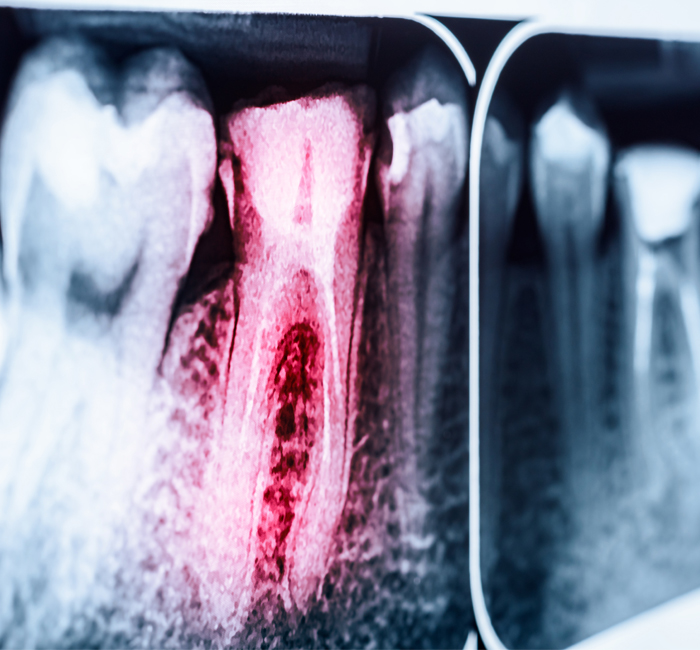
What Are The Steps Of Root Canal Treatment?
The procedure generally takes four steps to complete. Usually, the process takes between 1-2 visits to the dentist and is carried out as follows:
First Step
Local anesthesia will be given to numb the tooth. After this, the dentist will likely place a dental dam in your mouth that keeps the tooth clean and dry while the procedure happens.
Second Step
The dentist will use small tools to get to the inside of your tooth. Your dentist will clear away the part of the tooth that is diseased or traumatised and wash the area with hypochlorite and possibly an antimicrobial product.
Third Step
Your dentist will fill the area that has been cleared away. Often, a material called gutta percha is used to fill up the hole. The tooth will be closed with a temporary filling.
Last Step
You will wait a few weeks as the area heals. Your dentist will then complete the root canal by putting a permanent crown or another permanent type of restoration on the top of your tooth.
If your tooth is in constant pain or is sensitive to hot or cold drinks, you may be in need of root canal treatment. Contact our friendly staff at Divine Dental Care today and we will look after you.
Frequently Asked Questions
1. What is root canal treatment?
Root canal treatment is a procedure used to save a badly infected or decayed tooth. It involves removing the infected pulp inside the tooth, cleaning the area, and sealing it to prevent further infection. This helps preserve your natural tooth instead of removing it.
2. Why would I need a root canal?
You may need a root canal if the inner part of your tooth becomes infected or inflamed due to deep decay, cracks, or trauma. Common signs include persistent pain, sensitivity to hot or cold, or swelling. If left untreated, the infection can spread and may result in tooth loss.
3. Is root canal treatment painful?
Modern root canal treatment is generally no more uncomfortable than having a filling. Local anaesthetic is used to numb the area, so you should not feel pain during the procedure. Some mild soreness afterwards is normal and usually settles quickly.
4. How long does a root canal take?
Treatment is often completed in one to two visits, depending on the complexity of the tooth. In some cases, a temporary filling is placed first, followed by a permanent restoration. Your dentist will explain the plan based on your situation.
5. What happens after a root canal?
After the infection is removed, the tooth is sealed and usually restored with a filling or crown. This helps strengthen the tooth and restore normal function. You may be advised to avoid chewing on the area until fully restored.
6. Can a root canal save my tooth?
Yes, the main goal of root canal treatment is to save your natural tooth. It removes the infection while preserving the remaining tooth structure. This often avoids the need for extraction.
7. What happens if I don’t get a root canal?
If an infected tooth is not treated, the infection can worsen and spread to surrounding tissues. This may lead to increased pain, swelling, and eventually tooth loss. Early treatment helps prevent more serious complications.
8. How successful is root canal treatment?
Root canal treatment has a high success rate and can last many years with proper care. Good oral hygiene and regular dental check-ups help maintain the treated tooth. In most cases, it functions just like a natural tooth.