Understanding Snoring and Sleep Apnoea
Snoring is a common condition that can sometimes be associated with obstructive sleep apnoea (OSA), a disorder in which the airway partially or fully collapses during sleep. This can lead to interrupted breathing, disrupted sleep, and daytime fatigue.
Obstructive sleep apnoea requires diagnosis by a sleep physician, typically through an overnight sleep study. Once diagnosed, there are several management options available depending on the severity of the condition. For some patients, a dental appliance may be one suitable management option, either on its own or in combination with other treatments.
Book an appliance consultation: call (03) 9725 8040 or book online. We are open Monday to Friday 8:30am to 6:00pm and Saturday 8:30am to 5:00pm.
Mandibular Advancement Splints
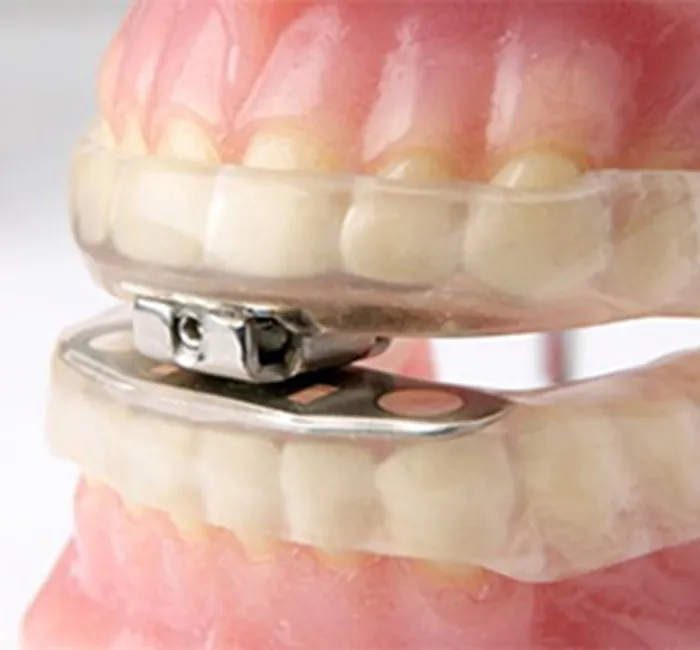
A mandibular advancement splint is an oral appliance designed to hold the lower jaw slightly forward during sleep, helping to keep the airway open and reduce the likelihood of airway collapse.
- Custom-fitted: made from impressions or digital scans of your teeth for comfortable fit and secure retention
- Worn during sleep: the appliance is placed before bed and removed in the morning
- May reduce symptoms: can help reduce snoring and symptoms of mild to moderate obstructive sleep apnoea in suitable patients
- Non-invasive: provides an alternative to CPAP therapy for patients who find mask-based treatment difficult to tolerate
Suitability for a mandibular advancement splint depends on individual assessment and sleep study results. Not all patients with snoring or sleep apnoea will be appropriate candidates for an oral appliance, and your dentist will discuss whether this option may be suitable for you.
Getting a Sleep Appliance
The process of obtaining a sleep appliance involves coordination between your sleep physician and your dentist to ensure appropriate care.
The typical steps include:
- Sleep physician referral: a diagnosis of snoring or obstructive sleep apnoea from a sleep physician, usually based on a sleep study
- Dental assessment: your dentist examines your teeth, gums, and jaw to determine whether an oral appliance is appropriate
- Impressions or digital scans: accurate records of your teeth are taken to fabricate the appliance
- Appliance fabrication: the splint is custom-made to your measurements by a dental laboratory
- Fitting and adjustment: the appliance is fitted and adjusted to ensure comfort and correct jaw positioning
Regular review appointments at our Croydon clinic allow us to check the condition of your appliance, monitor your teeth and jaw for any changes, and assess ongoing effectiveness. Treatment should be coordinated with your sleep physician, who may recommend a follow-up sleep study to evaluate the appliance's impact on your condition.