
Wisdom Teeth
What Are Wisdom Teeth?
They normally grow through between the ages of 17-21 and can often cause issues because there’s not enough room in the mouth for them to come through properly. Due to the lack of space the tooth can come through at an angle or only partially through the gum. This is what is known as impacted wisdom tooth.
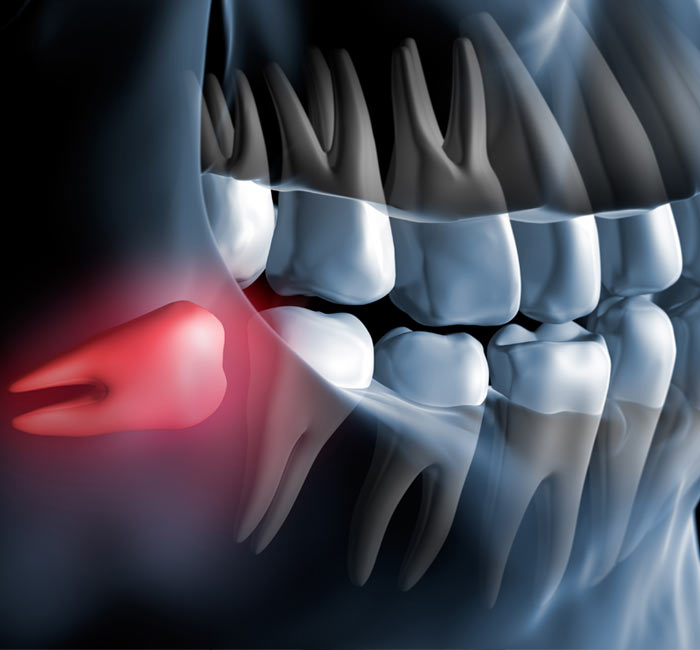
What Problems Can Impacted Wisdom Teeth Cause?
- pain
- damage to other teeth
- overcrowding of the existing teeth
- stiffness in jaws
- swollen and infected gums
- cysts
- dental cavities
- eating difficulties
- sinus issues
How Are They Removed?
Firstly, a dental radiograph (x-ray) will need to be taken in order to assess the position and angle of the impacted wisdom tooth. The location of vital anatomical structures such as nerves and blood vessels will also need to be determined. Once we have all this information, the dentist will make an assessment together with you to see whether the wisdom tooth can be done under local anesthetic in the dental chair, or you require a referral to an oral surgeon for very difficult and deeply impacted cases.
If you are experiencing problems with impacted wisdom teeth, call Divine Dental Care today and our highly experienced dentists will make your experience of removing the painful teeth as comfortable and reassuring as possible.
Frequently Asked Questions
What are wisdom teeth?
Wisdom teeth are the last set of molars that usually appear between the ages of 17 and 21. They sit at the very back of the mouth and are the final adult teeth to come through. In many cases, there isn’t enough space for them to erupt properly.
Do all wisdom teeth need to be removed?
No, not all wisdom teeth require removal. If they come through correctly, are healthy, and can be cleaned properly, they may not cause any issues. Removal is only recommended when they are causing or likely to cause problems.
What problems can wisdom teeth cause?
When there is not enough space, wisdom teeth can become impacted or grow at an angle. This may lead to pain, swelling, infection, damage to nearby teeth, or difficulty cleaning the area. In some cases, cysts or decay can also develop.
How do I know if my wisdom teeth need to come out?
Common signs include pain at the back of the mouth, swollen gums, jaw stiffness, or repeated infections. However, some impacted wisdom teeth may not cause symptoms at all. An X-ray is usually needed to assess their position properly.
What happens during wisdom teeth removal?
Your dentist will first take a dental X-ray to check the position of the teeth and nearby structures. The procedure is then carried out under local anaesthetic in most cases, and the tooth is carefully removed. In more complex cases, you may be referred for specialist care.
Is wisdom teeth removal painful?
The procedure itself is not painful due to local anaesthetic. You may feel pressure during the removal, and some discomfort or swelling afterwards is normal. This usually improves over a few days with proper aftercare.
How long does recovery take?
Most people recover within a few days to a week, depending on how complex the extraction was. Swelling and mild soreness are common in the first 48–72 hours. Your dentist will provide instructions to help support healing.
What should I do if my wisdom teeth start hurting suddenly?
If you experience sudden pain, swelling, or signs of infection, it’s important to contact the clinic as soon as possible. Early assessment can help prevent the issue from getting worse and may make treatment simpler.